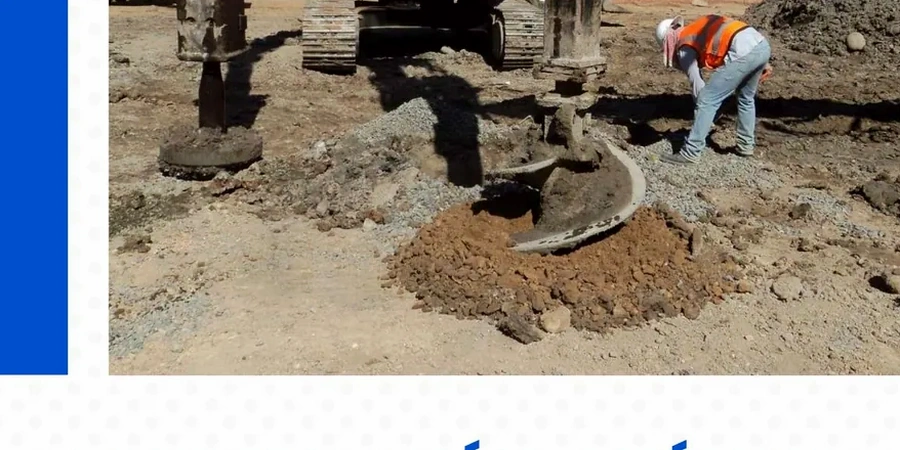
Ground improvement represents a critical discipline within geotechnical engineering that encompasses all techniques used to enhance the physical and mechanical properties of soils and fill materials. In Drummondville, where urban expansion increasingly encroaches upon marginal lands, the Improvement category addresses the fundamental need to transform weak, compressible, or otherwise unsuitable ground into reliable bearing strata. This field of practice draws upon soil mechanics, hydrogeology, and materials science to deliver engineered solutions that mitigate settlement, increase shear strength, and control groundwater. Without proper ground treatment, structures ranging from single-family homes to industrial warehouses risk differential settlement, cracking, and even catastrophic failure, making these interventions essential for both public safety and long-term asset durability.
The geological context of the Drummondville region presents specific challenges that make ground improvement particularly relevant. Much of the area is underlain by Quaternary deposits associated with the Champlain Sea, which retreated approximately 10,000 years ago. These deposits include thick sequences of sensitive marine clays, silts, and organic soils that exhibit high compressibility and low undrained shear strength. The Saint-François River valley, in particular, contains extensive zones of peat and organic-rich alluvium that can extend several metres below the surface. These soils are prone to significant primary and secondary consolidation, as well as strength loss when disturbed. Consequently, any development on these formations demands careful geotechnical evaluation and, in most cases, the application of one or more improvement techniques to achieve acceptable performance criteria for the intended structure.
Canadian standards and codes govern the design and execution of ground improvement works in Drummondville. The National Building Code of Canada (NBC), as adopted and potentially amended by the province of Quebec, establishes minimum requirements for foundation design, including allowable bearing pressures and settlement limits. Geotechnical investigations must conform to the Canadian Foundation Engineering Manual and relevant CSA standards, such as CSA-A23.3 for concrete foundations and CSA-S6 for bridge structures. For projects involving environmental protection, such as landfill design, the Landfill geotechnics service must comply with the Quebec Regulation respecting the landfilling and incineration of residual materials (REIMR) and guidelines from the Ministère de l'Environnement, de la Lutte contre les changements climatiques, de la Faune et des Parcs. These regulatory frameworks demand rigorous site characterization, defensible design parameters, and quality control during construction.
The types of projects in Drummondville that routinely require ground improvement are diverse. Residential subdivisions built on former agricultural land often encounter soft clay or organic deposits needing preloading or vertical drains to accelerate consolidation. Commercial and industrial developments, particularly in the Saint-Majorique and Saint-Nicéphore sectors, frequently rely on Preloading with surcharge design combined with Prefabricated vertical drain (PVD) design to achieve settlement within tolerable limits before slab-on-grade construction. Infrastructure projects such as road embankments, bridge approaches, and stormwater management ponds may require geogrid reinforcement or lightweight fill to address stability concerns on weak subgrades. Specialized applications like waste containment facilities integrate Geomembrane specification and geosynthetic clay liners to prevent leachate migration, while agricultural and recreational developments on peatlands demand tailored organic soil management strategies. Each project demands a site-specific combination of investigation, analysis, and treatment selection.
Ground improvement refers to engineered techniques that enhance soil properties such as strength, stiffness, and permeability to meet project requirements. In Drummondville, it becomes necessary when native soils, particularly the Champlain Sea clays and organic deposits common along the Saint-François River valley, cannot support proposed loads without excessive settlement or instability. A geotechnical investigation determines whether natural ground conditions are adequate or if treatment is required.
Ground improvement projects in Drummondville must comply with the National Building Code of Canada as adopted by Quebec, the Canadian Foundation Engineering Manual, and relevant CSA standards. Environmental aspects, such as landfill construction, fall under the Quebec Regulation respecting the landfilling and incineration of residual materials (REIMR). Municipal bylaws may also impose additional requirements for site development and stormwater management.
Selecting the appropriate technique depends on soil conditions, structural loads, allowable settlement, groundwater levels, and construction timelines. A detailed geotechnical investigation provides the necessary data, after which an engineer evaluates options such as preloading with vertical drains for soft clays, geogrid reinforcement for granular platforms, or deep mixing for very weak deposits. The choice balances technical performance with practical constraints and cost-effectiveness.
Building on untreated soft soils in Drummondville can lead to excessive total and differential settlement, causing structural cracking, misaligned doors and windows, and serviceability failures. Sensitive clays may lose significant strength when disturbed, potentially triggering slope instability or bearing capacity failures. Long-term creep settlement in organic soils can continue for decades, progressively damaging foundations, utilities, and pavements well after construction is complete.